✓ Minimum age for rental is typically 21, with surcharges for drivers under 25.
✓ An International Driving Permit (IDP) is recommended for non-English/French licenses.
✓ Insurance options are crucial; understand your coverage before renting.
✓ One-way rentals can be expensive due to drop-off fees.
How It Works
1
Choose Your Vehicle & Provider
Select a car class that suits your travel needs and budget, from compacts to SUVs. Compare major rental companies and local providers for the best rates and availability.
2
Understand Requirements & Insurance
Ensure you meet age requirements, possess a valid driver's license, and have a credit card. Carefully review insurance options and consider what coverage you truly need.
3
Book & Confirm Your Rental
Book your car in advance, especially during peak season, to secure your preferred vehicle and rate. Double-check all booking details and confirmation emails for accuracy.
4
Pick Up, Inspect & Drive
Upon arrival, thoroughly inspect the vehicle for existing damage before driving off. Familiarize yourself with local traffic laws and enjoy your Canadian adventure responsibly.
Navigating the Essentials: What You Need to Rent a Car in Canada
Photo: Kindel Media / Pexels
Renting a car in Canada opens up a world of exploration, allowing you to traverse its diverse landscapes, from the rugged Rockies to the vibrant Atlantic coastlines, at your own pace. However, before you hit the open road, understanding the fundamental requirements is paramount. Firstly, a valid driver's license is non-negotiable. For Canadian residents, a provincial driver's license is sufficient. International visitors, on the other hand, should present their valid driver's license from their home country. If your license is not in English or French, it is highly recommended, and sometimes mandatory, to obtain an International Driving Permit (IDP). An IDP translates your existing license into multiple languages and is recognized in over 150 countries, serving as a valuable supplement to your original document, not a replacement. Always carry both your original license and the IDP.
The minimum age requirement for renting a car in Canada typically stands at 21 years old. However, this is a crucial detail to verify, as many rental companies impose a 'young driver surcharge' for individuals under the age of 25. This daily fee can significantly impact your overall rental cost, so factor it into your budget. Some premium vehicle categories might also have higher age restrictions, sometimes requiring drivers to be 25 or even 30. Always check the specific terms and conditions of your chosen rental agency before booking to avoid any surprises.
Another critical requirement is a major credit card in the primary driver's name. This is almost universally required for the security deposit and to cover potential incidentals or additional charges. While some agencies might accept debit cards for payment, they will often still require a credit card for the security hold, or they may impose much stricter conditions, such as proof of return flight or additional deposits. Cash rentals are exceedingly rare and generally not an option with major providers. Ensure your credit card has sufficient available credit to cover the rental cost and the security deposit, which can range from a few hundred to over a thousand dollars depending on the vehicle and rental duration. Understanding these initial hurdles will set a solid foundation for a smooth car rental experience across Canada. For more general travel advice in Canada, consider visiting Canada travel guides.
Understanding Car Rental Insurance in Canada: What You Need to Know
Photo: Stiven Gonzales / Pexels
When you rent a car in Canada, navigating the labyrinth of insurance options can be one of the most perplexing aspects. Yet, it's undeniably one of the most important to ensure peace of mind and financial protection. Rental car companies will offer various types of insurance, but it's essential to understand what each covers and what you might already have through existing policies. The primary types of insurance you'll encounter are Loss Damage Waiver (LDW) or Collision Damage Waiver (CDW), and Liability Insurance.
LDW/CDW covers damage to the rental vehicle itself, waiving your financial responsibility for theft or collision. Without it, you could be liable for the full value of the car if it's damaged or stolen. This is often the most expensive add-on, and many travelers wonder if they truly need it. It's worth checking if your personal car insurance policy extends to rental cars. Many comprehensive auto insurance policies in Canada and the US do, but often with limitations, such as not covering certain vehicle types, international rentals, or offering lower coverage limits. Similarly, many premium credit cards offer secondary CDW/LDW coverage as a benefit when you pay for the rental with their card. This usually means it kicks in after your primary insurance (or if you have no primary insurance), but it's vital to call your credit card company directly to understand the specifics, including any exclusions, claim processes, and if it covers loss of use, administrative fees, or diminished value.
Liability insurance, on the other hand, covers damages or injuries you might cause to other people or their property while driving the rental car. This is separate from LDW/CDW. In Canada, a minimum level of third-party liability insurance is legally required, and rental companies will provide this as part of the rental agreement. However, the basic coverage might be minimal. If you have personal auto insurance, your liability coverage might also extend to rental vehicles, offering higher limits. If you don't own a car or your personal policy doesn't cover rentals sufficiently, you might consider purchasing Supplemental Liability Insurance (SLI) from the rental company, which significantly increases your coverage limits. Being adequately insured is not just a legal formality; it's a critical safety net against potentially catastrophic financial consequences in the event of an accident. Always take the time to review your current coverage and consider your options carefully before declining or accepting additional insurance at the rental counter.
Booking Strategies and Picking Up Your Rental Car in Canada
Photo: Erik Mclean / Pexels
Securing the right rental car at the best price in Canada involves strategic planning, especially if you're traveling during peak seasons like summer or national holidays. Booking in advance is almost always beneficial, as it typically yields lower rates and ensures a wider selection of vehicles. Spontaneous bookings, particularly at airport counters, often come with a premium price tag. Utilize online comparison websites that aggregate deals from multiple rental agencies, but don't stop there. It's often wise to check the direct websites of major companies (e.g., Enterprise, Hertz, Avis, Budget, National, Thrifty, Dollar) as they sometimes offer exclusive promotions or loyalty program discounts not found elsewhere. Consider signing up for their free loyalty programs, which can expedite pick-up processes and sometimes provide upgrades.
When making your reservation, pay close attention to the details: the exact pick-up and drop-off locations and times, the fuel policy (full-to-full is generally the most economical), and any included mileage limits. While most rentals in Canada offer unlimited mileage, especially for inter-province travel, it's crucial to confirm this, particularly if you plan an extensive road trip. One-way rentals, where you pick up in one city and drop off in another, are convenient for certain itineraries but often incur substantial 'drop-off' fees. These fees can sometimes exceed the cost of the rental itself, so always factor them into your budget and compare different routes or even consider a round trip if feasible.
Upon arrival at the rental counter, have all your documents ready: your valid driver's license (and IDP if applicable), your credit card, and your rental confirmation. Before driving away, perform a thorough inspection of the vehicle. Document any existing scratches, dents, or damage – both interior and exterior – with photos or videos. Point them out to the rental agent and ensure they are noted on the rental agreement. This step is critical to avoid being charged for pre-existing damage upon return. Familiarize yourself with the car's features, such as headlight operation, wiper controls, and the fuel cap release. Ask the agent any questions you have. Understanding the vehicle and ensuring its condition is accurately recorded will save you potential headaches later, allowing you to focus on the incredible journey ahead. Explore more about Canadian destinations for your road trip at Canadian travel destinations.
Essential Tips for a Smooth Rent a Car in Canada Experience
Photo: Sukhan Sivia / Pexels
To ensure your car rental experience in Canada is as seamless and enjoyable as possible, keep these expert tips in mind:
* **Understand Canadian Driving Laws:** Canada primarily uses the metric system for speed limits (km/h) and distances (km). Speed limits vary by province and road type, typically 50 km/h in urban areas, 80-100 km/h on rural roads, and 100-120 km/h on highways. Always adhere to posted signs. Right turns on red lights are generally permitted after a full stop, except where explicitly prohibited (e.g., Montreal). Seatbelts are mandatory for all occupants.
* **Winter Driving Considerations:** If you plan to rent a car in Canada during winter (roughly October to April), especially in mountainous regions or the Prairies, ensure your rental comes equipped with winter tires. In Quebec, winter tires are legally mandatory from December 1 to March 15. Many provinces recommend them. All-season tires are not equivalent to dedicated winter tires for icy or snowy conditions. Requesting a vehicle with winter tires or 4-wheel drive (4WD) can significantly enhance safety and control.
* **Fuel Up Wisely:** Gas prices in Canada are generally higher than in the US and vary significantly by province and even within cities. Always return the car with the agreed-upon fuel level (usually full) to avoid exorbitant refueling charges from the rental company. Use apps like GasBuddy to find the cheapest fuel stations along your route.
* **Navigation & Connectivity:** While many newer rental cars come with built-in GPS, relying on your smartphone with a Canadian data plan or a pre-downloaded offline map app is often more reliable and cost-effective. Cellular service can be spotty in remote areas, so having offline maps is a smart backup.
* **Tolls and Express Lanes:** Some major Canadian highways, particularly in Ontario (e.g., Highway 407 ETR), have electronic tolls. Rental cars often come with transponders, and the charges will be billed to you by the rental company, usually with an administrative fee. Be aware of these to avoid unexpected costs. Plan your routes to bypass them if possible, or understand the billing process.
* **Parking Smart:** Parking can be challenging and expensive in major Canadian cities. Look for public parking garages or lots, and always pay attention to parking signs to avoid tickets or towing. Many hotels offer parking, but it might be an additional charge. Consider using public transit in dense urban centers and picking up your rental car when leaving the city.
* **Wildlife Awareness:** Especially in rural areas or national parks, be vigilant for wildlife on the roads, particularly at dawn and dusk. Deer, moose, and even bears can pose a significant hazard. Drive cautiously, especially around bends, and obey any wildlife crossing signs.
By keeping these practical tips in mind, you'll be well-prepared to rent a car in Canada and enjoy a smooth, safe, and unforgettable road trip across its breathtaking landscapes.
Comparison
Feature
Major Rental Companies (e.g., Hertz, Enterprise)
Local/Independent Agencies
Car Sharing Services (e.g., Turo)
Availability & Locations
Extensive, especially at airports
Limited, often city-specific
Variable, depends on owners
Vehicle Selection
Wide range, guaranteed category
Limited, specific models
Highly diverse, unique cars
Pricing & Deals
Competitive, often discounts
Potentially cheaper, less flexible
Can be very affordable, or premium
Insurance Options
Comprehensive, easy add-ons
Varies, often third-party
Provided by platform, check details
Customer Service
24/7 support, roadside assistance
Limited hours, local support
Platform support, owner communication
Flexibility (Pick-up/Drop-off)
✓
✗
✓
Young Driver Surcharges
Common
Less common
Varies by owner
What Readers Say
★★★★★
"Renting a car in Canada for my trip through the Rockies was incredibly straightforward. The rental agency at Vancouver airport had my reserved SUV ready, and the staff walked me through all the insurance options clearly, ensuring I had peace of mind for my journey."
Sarah L. · Vancouver, BC
★★★★★
"I used a major rental company in Toronto to visit family outside the city. The process was efficient, the car was clean, and having the unlimited mileage option meant I didn't have to worry about exploring various small towns. Highly recommend booking in advance!"
Mark D. · Toronto, ON
★★★★★
"As a first-time international renter, I was a bit nervous about the requirements to rent a car in Canada. The agency accepted my IDP without any issues, and their detailed explanation of the vehicle's features made me feel confident driving on Canadian roads. A fantastic experience!"
Jessica M. · Calgary, AB
★★★★★
"Rented a car in Montreal for a week. The car was great, though the young driver surcharge was a bit steep. Still, it was worth it for the freedom to explore Quebec's beautiful countryside at my own pace rather than relying on public transport."
David P. · Montreal, QC
★★★★★
"Our family trip to the Maritimes was made perfect by our rental car. We were able to visit remote lighthouses and coastal towns that would have been inaccessible otherwise. The booking process was smooth, and the vehicle was perfect for our needs."
Emily R. · Halifax, NS
Frequently Asked Questions
What documents do I need to rent a car in Canada as an international visitor?
As an international visitor, you will need a valid driver's license from your home country, a major credit card in the primary driver's name, and often an International Driving Permit (IDP) if your license is not in English or French. While not always legally required, an IDP is highly recommended for translation purposes and ease of understanding by local authorities and rental agencies.
Is there a minimum age to rent a car in Canada?
Yes, the minimum age to rent a car in Canada is typically 21 years old. However, most rental companies apply a 'young driver surcharge' for renters aged 21-24. Some premium vehicle categories may also have higher age restrictions, such as 25 or even 30 years old. Always confirm the specific age policies with your chosen rental agency.
How do I choose the right car rental insurance in Canada?
Choosing the right car rental insurance involves assessing your existing coverage (personal auto insurance, credit card benefits) and understanding the rental company's offerings. Key coverages include Loss Damage Waiver (LDW)/Collision Damage Waiver (CDW) for damage to the rental car and Liability Insurance for damages to others. Contact your personal insurer and credit card company beforehand to clarify what's covered, and then decide if supplemental insurance from the rental agency is necessary for adequate protection.
How much does it cost to rent a car in Canada?
The cost to rent a car in Canada varies widely based on vehicle type, rental duration, season, location, and the rental company. A compact car might range from $40-$70 CAD per day, while an SUV could be $70-$120+ CAD per day. These prices don't include insurance, fuel, young driver surcharges, or one-way fees, which can significantly increase the total cost. Booking in advance and comparing prices across different providers can help secure better rates.
Should I choose a major rental company or a local one when renting a car in Canada?
Major rental companies (e.g., Hertz, Enterprise, Avis) generally offer wider availability, extensive fleets, 24/7 roadside assistance, and often more straightforward insurance options, especially at airports. Local or independent agencies might offer slightly lower rates or unique vehicles, but their availability, customer service hours, and insurance terms can be less standardized. For most travelers, especially those unfamiliar with Canada, a major rental company provides a more reliable and predictable experience.
Who benefits most from renting a car in Canada?
Travelers who benefit most from renting a car in Canada are those planning to explore regions outside major city centers, undertake scenic road trips, or require flexibility in their itinerary. Families with children, groups with luggage, and adventurers keen on accessing national parks or remote natural attractions will find a rental car indispensable for convenience and independence.
Are there any specific safety concerns when driving a rental car in Canada?
Beyond general driving safety, be aware of specific Canadian conditions. Wildlife encounters are common in rural and forested areas, especially at dawn/dusk; drive cautiously. Winter driving requires appropriate tires (mandatory in Quebec, recommended elsewhere) and adapting to snow/ice. Additionally, be mindful of varying provincial traffic laws and stay updated on local weather conditions, particularly for long-distance travel.
What are the future trends for car rental in Canada?
Future trends for car rental in Canada are likely to include an increased focus on electric vehicles (EVs) and hybrid options, more seamless digital booking and check-out experiences, and the continued growth of peer-to-peer car-sharing platforms. We may also see more personalized insurance offerings and subscription-based rental models emerge, catering to diverse travel needs and environmental consciousness.
Ready to explore Canada's breathtaking beauty on your terms? Use this guide to confidently rent a car in Canada, ensuring a smooth, safe, and unforgettable journey across its magnificent landscapes. Start planning your ultimate Canadian road trip today!

 Photo: Kindel Media / Pexels
 Photo: Stiven Gonzales / Pexels
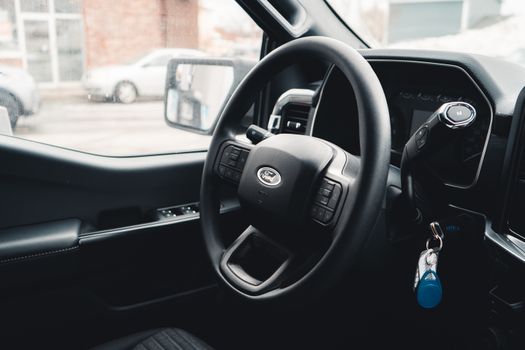 Photo: Erik Mclean / Pexels
 Photo: Sukhan Sivia / Pexels