✓ Most non-US citizens need an eTA or a Visitor Visa to enter Canada.
✓ An eTA is for visa-exempt travelers arriving by air, while a Visitor Visa is for those from visa-required countries.
✓ Applying online is generally the fastest and most convenient method.
✓ Processing times vary significantly, so apply well in advance of your travel dates.
How It Works
1
Determine Your Eligibility
First, identify if you need an Electronic Travel Authorization (eTA) or a Temporary Resident Visa (TRV), also known as a Visitor Visa. This depends primarily on your nationality and how you plan to enter Canada.
2
Gather Necessary Documents
Collect all required documentation, which typically includes a valid passport, proof of funds, return ticket, and for a TRV, additional forms and supporting letters. Ensure all documents are current and accurately reflect your information.
3
Complete the Application
Fill out the appropriate application form online or on paper, providing truthful and complete information. Double-check all entries to avoid delays or rejections due.
4
Submit and Await Decision
Pay the application fee and submit your application. Track its status online and be prepared to provide biometrics or attend an interview if requested by Immigration, Refugees and Citizenship Canada (IRCC).
Understanding Canada's Entry Requirements for Visitors
Photo: RDNE Stock project / Pexels
Planning a trip to Canada is an exciting prospect, promising breathtaking landscapes, vibrant cities, and unique cultural experiences. However, before you can immerse yourself in the Great White North, understanding the Canada visa requirements for tourists is paramount. The first crucial step is to determine whether you need an Electronic Travel Authorization (eTA) or a Temporary Resident Visa (TRV), commonly known as a Visitor Visa. This distinction is primarily based on your nationality and how you intend to enter Canada.
For citizens of certain visa-exempt countries, an eTA is the mandatory requirement if arriving by air. This includes travelers from countries like the United Kingdom, most European Union member states, Australia, New Zealand, Japan, and South Korea, among others. The eTA is electronically linked to your passport and is valid for up to five years or until your passport expires, whichever comes first. It allows for multiple entries into Canada for short stays (typically up to six months per visit) for tourism, business, or transit. Applying for an eTA is a straightforward online process, usually taking only a few minutes to complete, with most approvals granted within minutes. However, it's always wise to apply a few days or even weeks in advance, just in case there are any processing delays or requests for additional information. It's important to remember that an eTA is only for air travel; if you are entering Canada by land or sea from a visa-exempt country, you typically only need a valid passport.
Conversely, if you are a citizen of a country that is not visa-exempt, you will need to apply for a Visitor Visa (TRV) to enter Canada, regardless of your mode of travel. This applies to a vast number of countries worldwide. The Visitor Visa application process is more comprehensive than the eTA and requires a more extensive collection of documents, including proof of sufficient funds to support your stay, a clear travel itinerary, and a genuine intention to leave Canada at the end of your authorized stay. The application can be submitted online through the IRCC portal or, in some cases, via a paper application at a Visa Application Centre (VAC). Processing times for Visitor Visas can vary significantly, ranging from a few weeks to several months, depending on the applicant's country of residence and the volume of applications. Therefore, meticulous planning and early application are highly recommended to avoid any last-minute travel disruptions. Ensuring you meet all Canadian immigration standards is key to a smooth entry. It's also crucial to distinguish between a tourist visa and other types of visas, such as study or work permits, as each has distinct requirements and purposes.
The eTA Application Process: A Step-by-Step Guide for Visa-Exempt Travelers
Photo: Damir K . / Pexels
For eligible travelers, obtaining an Electronic Travel Authorization (eTA) is a relatively simple and quick process, designed to streamline entry for tourists arriving by air. The entire application is completed online, making it accessible from anywhere with an internet connection. To begin, you'll need a valid passport from an eTA-eligible country, a credit card to pay the small application fee (CAD $7), and an email address. The official government website for eTA applications is the only legitimate portal; beware of third-party websites that charge exorbitant fees or offer unofficial services.
The application form itself asks for basic personal information, including your name, date of birth, place of birth, passport details, and contact information. You will also be asked a series of security questions related to your health, criminal history, and past immigration issues. It is crucial to answer all questions truthfully and accurately. Any misrepresentation could lead to your application being denied and potentially impact future travel to Canada. Once you've completed the form and paid the fee, you will typically receive an email within minutes, either confirming your eTA approval or requesting additional information. In some cases, IRCC may require you to submit supporting documents or provide further clarification. If approved, your eTA is electronically linked to the passport you used to apply. This means you don't need to print anything; the airline will verify your eTA status when you check in for your flight to Canada.
An eTA is valid for up to five years from the date of issue or until your passport expires, whichever comes first. This allows for multiple entries into Canada during its validity period, with each visit typically permitted for up to six months. However, the final decision on the length of your stay rests with the border services officer upon your arrival. It's always advisable to carry proof of your travel itinerary and sufficient funds, even with an eTA, as these may be requested. While the eTA simplifies entry for many, it does not guarantee entry. A border services officer always has the final say on who enters Canada. Therefore, understanding the nuances of Canada visa requirements for tourists, even for eTA holders, is vital.
Navigating the Visitor Visa (TRV) Application for Non-Exempt Countries
Photo: Kampus Production / Pexels
For citizens of countries that require a Temporary Resident Visa (TRV) to enter Canada, the application process is more comprehensive and requires careful attention to detail. This visa is essential for those who do not qualify for an eTA and wish to visit Canada for tourism, to visit family, or for other short-term purposes. The first step involves gathering a substantial set of documents. This typically includes a valid passport, proof of financial support to cover your expenses during your stay, a detailed travel itinerary, a letter of invitation if visiting family or friends, and proof of your intention to return to your home country (e.g., employment letter, property ownership, family ties).
The application itself can be completed online through the IRCC secure portal, which is generally the recommended method as it's faster and allows you to track your application status. Alternatively, in some regions, you may be required to submit a paper application at a Visa Application Centre (VAC). When applying online, you'll need to create an account, fill out the necessary forms (such as IMM 5257 for Temporary Resident Visa, IMM 5645 for Family Information, etc.), and upload all supporting documents. Ensure all documents are scanned clearly and meet the specified file size and format requirements. After submitting your application and paying the processing fee, you will likely receive a request to provide biometrics (fingerprints and a photo) at a VAC in your country of residence. This is a mandatory step for most TRV applicants.
Processing times for Visitor Visas can vary significantly, from a few weeks to several months, depending on the country from which you are applying and the current caseload of IRCC. It is crucial to apply well in advance of your intended travel date. Once your visa is approved, it will be affixed to your passport. The duration of your visa (single-entry or multiple-entry) and the length of stay permitted will be specified on the visa itself, with the maximum stay usually being six months per entry, though this is ultimately determined by the border services officer upon arrival. Understanding the precise documentation for international travel to Canada is critical to a successful application. Remember that a TRV, like an eTA, does not guarantee entry; a border services officer retains the final authority.
Common Pitfalls and Expert Tips for a Smooth Visa Application
Photo: Vlada Karpovich / Pexels
Navigating the Canada visa requirements for tourists can sometimes feel daunting, and unfortunately, many applicants encounter common pitfalls that can delay or even lead to rejection of their applications. Being aware of these issues and taking proactive steps can significantly increase your chances of a smooth process. One of the most frequent mistakes is providing incomplete or inaccurate information. Double-check every field on your application form and ensure all supporting documents are current and correctly reflect the information provided. Discrepancies, even minor ones, can raise red flags for immigration officers.
Another common issue is insufficient proof of funds. Applicants must demonstrate they have enough money to support themselves financially during their entire stay in Canada without working illegally. This includes funds for accommodation, food, transportation, and incidental expenses. Providing bank statements, pay stubs, or a letter from an employer confirming your employment and salary can be crucial. Moreover, many applications are denied due to a lack of clear evidence of intent to leave Canada. Immigration officers need to be convinced that you are a genuine visitor and will return to your home country. Strong ties to your home country, such as family responsibilities, property ownership, a stable job, or enrollment in educational programs, can serve as compelling evidence.
**Expert Tips for a Successful Application:**
* **Apply Early:** Always submit your application well in advance of your planned travel dates, especially for Visitor Visas, where processing times can be extensive.
* **Gather All Documents:** Create a checklist of all required documents and ensure you have them all before starting your application. Organized submission is key.
* **Be Truthful:** Always provide honest answers to all questions. Misrepresentation can lead to severe penalties, including a ban from entering Canada for several years.
* **Proofread Thoroughly:** Before submitting, meticulously review your entire application for any typographical errors or omissions.
* **Stay Informed:** Check the official IRCC website regularly for updates on processing times, policy changes, and specific requirements for your country.
* **Seek Professional Help (If Needed):** If your case is complex or you are unsure about any part of the application, consider consulting with a Regulated Canadian Immigration Consultant (RCIC) or a lawyer.
By avoiding these common errors and following these expert tips, you can significantly improve your chances of a successful application and enjoy your Canadian adventure without unnecessary stress.
Comparison
Feature
eTA (Electronic Travel Authorization)
Visitor Visa (Temporary Resident Visa)
Eligibility
Citizens of visa-exempt countries (air travel only)
Citizens of visa-required countries
Application Method
Online only
Online or paper (at VAC)
Cost (CAD)
$7
$100 (plus biometrics fee)
Processing Time
Minutes to days
Weeks to several months
Validity
Up to 5 years or passport expiry
Varies, often up to 6 months per entry
Mode of Entry
Air only
Air, land, or sea
Required Documents
Passport, credit card, email
Passport, proof of funds, itinerary, invitation letter, etc.
What Readers Say
★★★★★
"Applying for my eTA for Canada was incredibly fast and easy. I got approval within minutes, which made planning my trip stress-free. Understanding the Canada visa requirements for tourists was straightforward with the clear government website."
Sarah J. · London, UK
★★★★★
"The Visitor Visa process seemed daunting at first, but by following the detailed instructions on the IRCC website and preparing all documents meticulously, I got my visa approved. It took a few weeks, but it was worth it to see Canada."
Rajesh K. · Mumbai, India
★★★★★
"I was initially confused about whether I needed an eTA or a visa, but the online tool clarified everything. My eTA was approved quickly, allowing me to book my flight to Vancouver without any worries. Excellent experience with Canada visa requirements for tourists."
Maria G. · Mexico City, Mexico
★★★★★
"My eTA was approved quickly, but my friend from a different country had a longer wait for his visa. It highlights the difference in Canada visa requirements for tourists based on nationality. Both processes worked, but patience is key for some."
David L. · Sydney, Australia
★★★★★
"Applying for the Canadian Visitor Visa required a lot of paperwork, but the online portal was user-friendly. I uploaded all my documents, provided biometrics, and received my visa in about two months, allowing me to visit my relatives."
Chen W. · Beijing, China
Frequently Asked Questions
What are the main Canada visa requirements for tourists?
The main requirements depend on your nationality. Visa-exempt travelers arriving by air need an Electronic Travel Authorization (eTA), while citizens of visa-required countries need a Temporary Resident Visa (TRV) or Visitor Visa. Both require a valid passport, proof of sufficient funds, and intent to leave Canada.
I have a valid eTA but my passport expires soon. Do I need a new eTA?
Yes, your eTA is electronically linked to your passport. If your passport expires, your eTA becomes invalid. You will need to apply for a new eTA with your new passport before traveling to Canada by air.
How do I prove I have sufficient funds for my stay in Canada?
You can prove sufficient funds by providing bank statements, a letter from your employer stating your salary, or a letter from a financial institution. The amount required varies depending on the length of your stay and whether you have prepaid accommodations.
What is the cost of a Canadian Visitor Visa or eTA?
An eTA costs CAD $7. A Visitor Visa (TRV) costs CAD $100 per person, plus an additional CAD $85 for biometrics (fingerprints and photo) for most applicants. These fees are subject to change by IRCC.
Is the Canada Visitor Visa the same as a work permit or study permit?
No, a Canada Visitor Visa (TRV) is specifically for temporary visits for tourism, family visits, or short business trips, and does not permit you to work or study in Canada. Work and study permits are separate categories with different application processes and requirements.
Who should apply for Canada visa requirements for tourists?
Anyone who is not a Canadian citizen, a permanent resident of Canada, or a U.S. citizen, and wishes to visit Canada for tourism, must meet the Canada visa requirements for tourists. This involves either an eTA or a Visitor Visa, depending on their country of origin and mode of entry.
What if my visa application is refused? Can I appeal?
If your visa application is refused, IRCC will usually provide a reason for the refusal. While there isn't a formal appeal process for Visitor Visas, you can reapply if you can address the reasons for the refusal or provide new information. It's crucial to understand why your previous application was denied before reapplying.
Are there any upcoming changes to Canada visa requirements for tourists?
Immigration policies can change. It's always best to check the official Immigration, Refugees and Citizenship Canada (IRCC) website directly before planning your trip to ensure you have the most up-to-date information on Canada visa requirements for tourists.
Embark on your Canadian adventure with confidence. By understanding and diligently following the Canada visa requirements for tourists, you can ensure a smooth application process and an unforgettable journey. Start your application today and prepare to explore all that Canada has to offer!

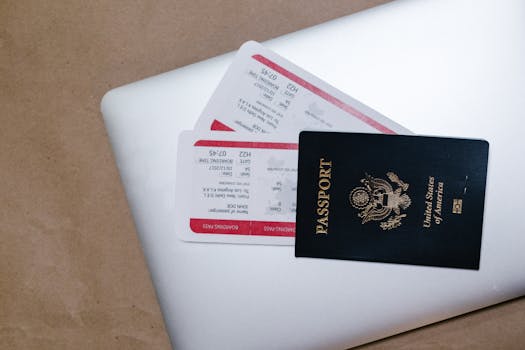 Photo: RDNE Stock project / Pexels
 Photo: Damir K . / Pexels
 Photo: Kampus Production / Pexels
 Photo: Vlada Karpovich / Pexels